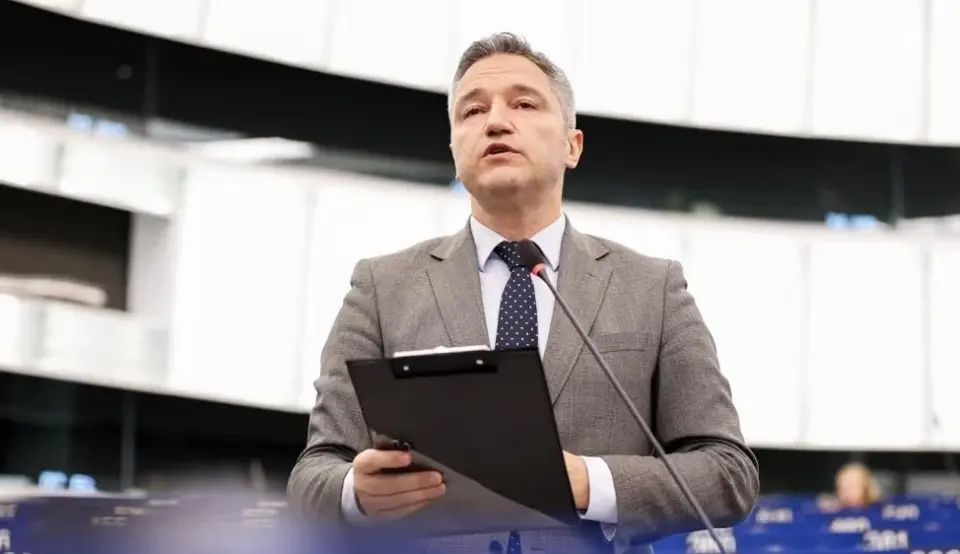
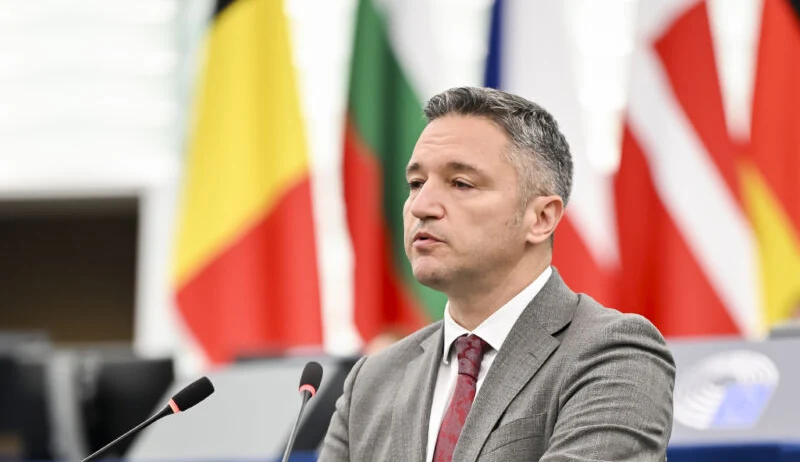
“Digitalisation is already fundamentally changing Europe’s food system, from production to the end consumer. This is about traceability of products along the entire chain: where they come from, how they are produced, what they contain. The focus is on how this information can be made accessible, understandable and reliable for businesses, institutions and consumers.” This was stated by Bulgarian MEP Kristian Vigenin from the Group of the Progressive Alliance of Socialists and Democrats, who organised a discussion in the European Parliament on digital transparency in the agri-food sector and its impact on small and medium-sized enterprises.
The forum, attended by representatives of business, the scientific community and institutions, discussed both the opportunities and the challenges facing the sector.
“New technologies already make it possible to trace the origin of food in real time, to guarantee its safety and to give consumers better information,” Vigenin noted.
The TITAN project in practice
Concrete solutions were presented under the TITAN project, which demonstrates digital transparency in practice: tracing the supply chain of olive oil and honey to guarantee authenticity; detecting undeclared allergens and improving food safety; digital platforms for sustainable tomato and rice production; using QR codes for better traceability and protection against fraud; tools for proving supply chains free of forced labour.
“These examples clearly show the potential of digital transparency, but also its limits,” the MEP pointed out.
The impact on small and medium-sized enterprises
Vigenin focused on the impact on small and medium-sized enterprises: “For small and medium-sized enterprises this means new opportunities, but also investment in technology, requirements for collecting and sharing data, and administrative burden.”
He stressed the importance of balance, especially for countries like Bulgaria: “In these countries the agri-food sector relies heavily on small producers and processors. For them, the right balance between requirements and support will be decisive.” According to Vigenin, transparency should not be seen as an end in itself, but as a tool for more trust, better consumer protection and more sustainable production.
“Dialogue is especially important, because we need clear rules, common standards and solutions that work in real conditions. Only in this way can we ensure that future policies will be not only ambitious, but also applicable in practice,” the MEP said in conclusion.