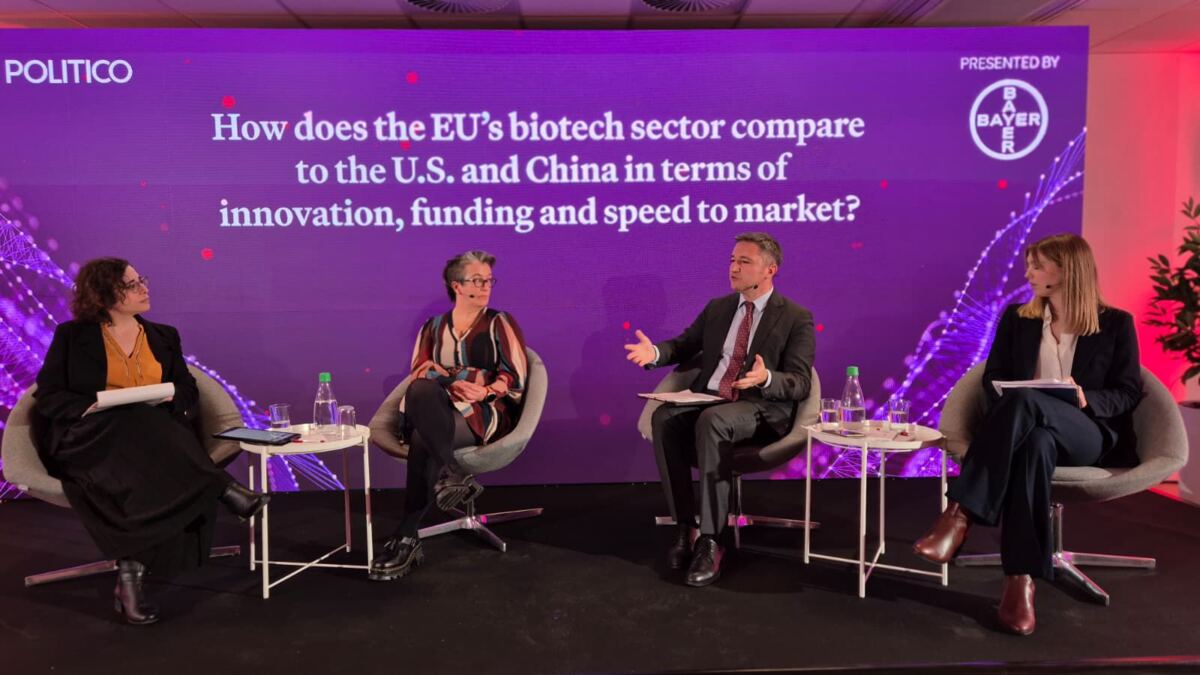
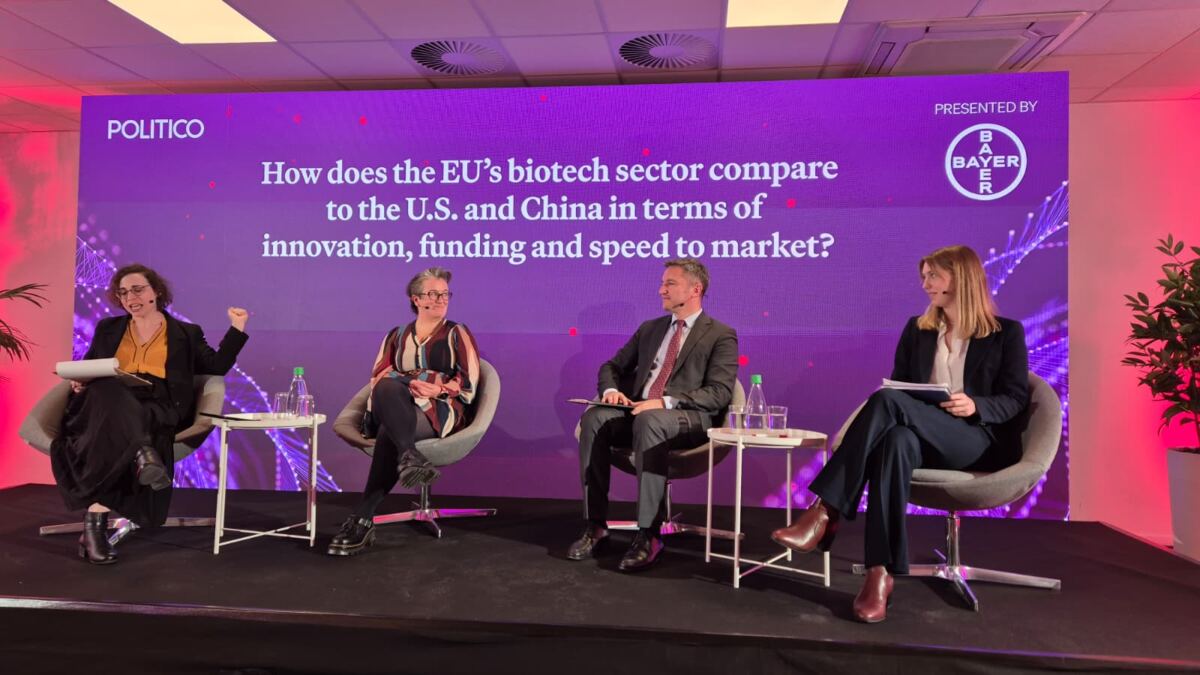
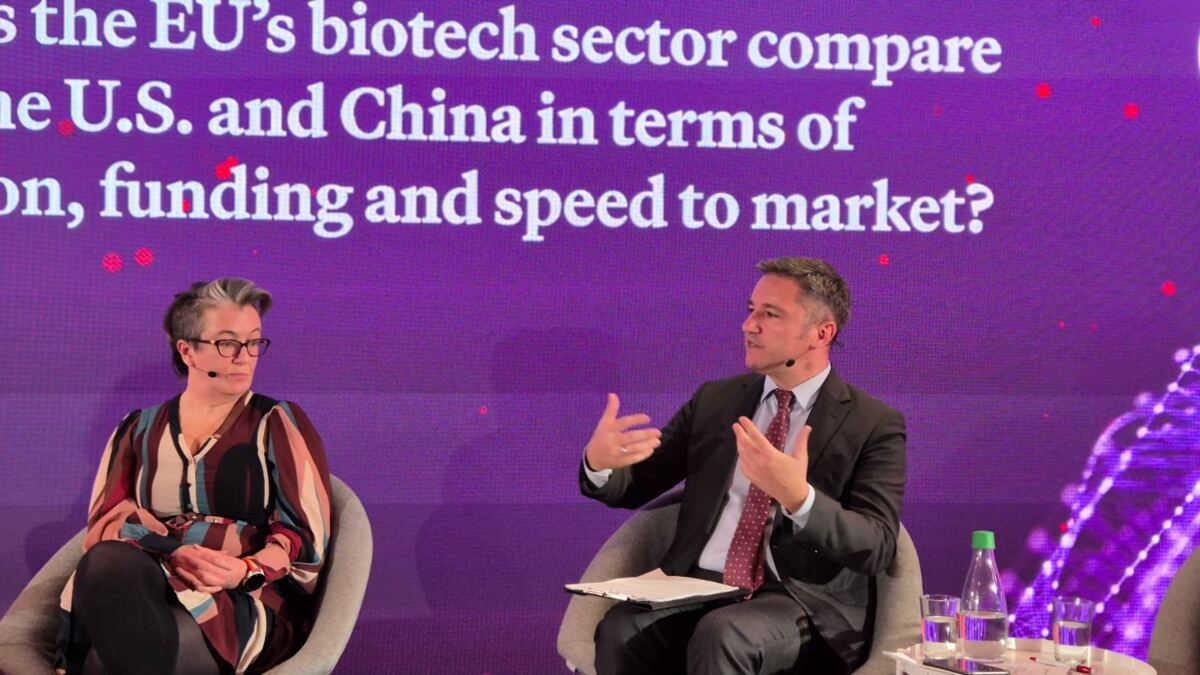
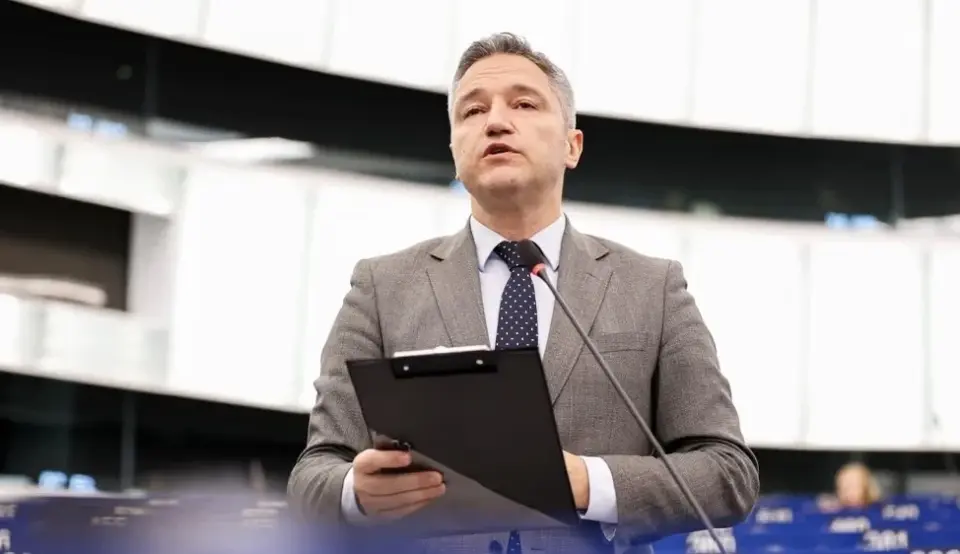
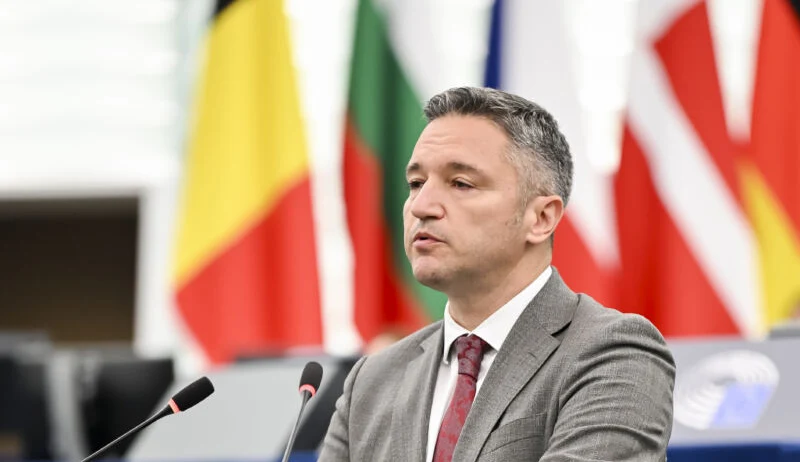
“Europe needs its own model for biotechnology development. We should not seek to imitate the US or China, but create our own model based on European values, sustainability and social responsibility. This is what Kristian Vigenin, Bulgarian MEP from the Group of the Progressive Alliance of Socialists and Democrats in the European Parliament, said at the panel discussion “Europe’s Biotech Moment: Innovation or Stagnation?” organised by POLITICO and Bayer in Brussels. In a lively conversation with Clare Scantlebury, Director General of EuropaBio, and Hampton Toole, Research Fellow at RAND Europe, he discussed the challenges and opportunities facing Europe’s biotech sector.
Leading experts from industry, academia and European institutions took part in the discussion. The main focus was on the need for a comprehensive and balanced regulatory framework that supports innovation but also ensures the safety and sustainability of the biotechnology sector.
MEP Kristian Vigenin, who is a member of the Committee on Environment, Public Health and Food Safety (ENVI), stressed that losing people’s trust in science and new technologies would be a strategic mistake. “Deregulation is not the solution – instead Europe needs a smart and balanced revision of existing rules so that they are both predictable and flexible, encouraging innovation without compromising safety standards,” he stressed.
Vigenin pointed out that the expected in December Biotech Act I will be focused on healthcare – a sector that is very important for building trust between citizens, science and institutions. “This act can and should be developed in synchrony with the Pharmaceutical Package so that new regulatory initiatives do not compete but complement each other. Only through consistency and coordination will we ensure faster access of innovation to patients and strengthen the competitiveness of European biotechnology at a global level,” he noted.
Kristian Vigenin stressed that the upcoming Biotech Act I in the European Union should be drafted transparently and with broad political support, not as a hasty political compromise. “EU strategies sound ambitious, but without real funding they risk remaining symbolic. New legislation must ensure predictable rules, incentives for investment and coordinated support from Member States. Otherwise, we risk technological transformation happening piecemeal and with limited effect,” he noted.
Vigenin also expressed concern about the uneven distribution of biotechnology advances across the Union: “Europe’s true potential in biotechnology will be measured not only by innovation, but also by its spread across Europe – from central capitals to peripheral regions.”