Vigenin discussed modernising the rules for chemical, cosmetic and fertiliser products with the American Chamber of Commerce
12/12/2025
Vigenin: Prevention must be at the heart of European cardiovascular health policy
18/12/2025
Vigenin discussed modernising the rules for chemical, cosmetic and fertiliser products with the American Chamber of Commerce
12/12/2025
Vigenin: Prevention must be at the heart of European cardiovascular health policy
18/12/2025
Vigenin to Darik: The BSP needs radical reforms
According to the MEP, Bulgaria's entry into the euro area is not a reason for panic, but a chance for the economy
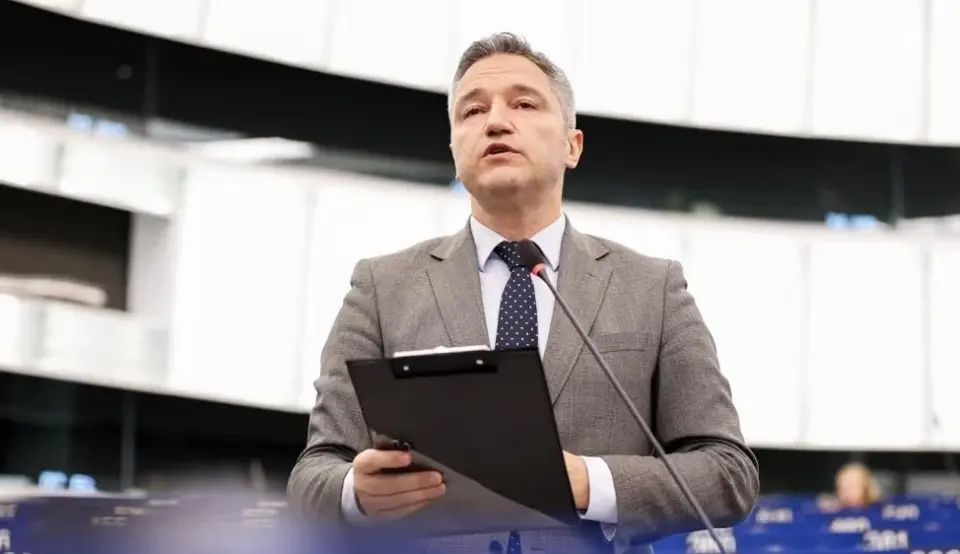
“The BSP needs radical reforms. Decisive and categorical steps are needed to bring the party back as a leading factor in political life, rather than a party on the edge of survival.” This was stated by Bulgarian MEP Kristian Vigenin from the Group of the Progressive Alliance of Socialists and Democrats in the European Parliament to Darik Radio. He added that the BSP cannot get out of the current situation “if we pretend that nothing has happened”. In his words the protests in the country were large-scale and from day one their energy showed that half-measures would not calm the tension. In his view it was right to give a chance for a new perspective through elections, because citizens, especially young people, want different politics, and whoever cannot answer that demand will be left off the political stage.
Vigenin noted that the government’s resignation on the eve of joining the euro area, and a cabinet leaving without an adopted budget, is not good practice. He was reassuring, however, that the institutional mechanisms guarantee stability: “The National Assembly is not dissolved and can take responsible decisions if needed, and the other institutions work with their full mandates and powers.” The MEP called for more responsibility and assured that there are no grounds for concern about the process of introducing the euro.
On prices, Vigenin stressed that “two leva should not become two euro” and that in cases like that people should report it. “Just as an income of 1,000 leva will become 500 euro, so a price of 2 leva has to become 1 euro, with some rounding,” he pointed out, and called for there to be no abuses or misleading of citizens. The MEP recalled that on his initiative young programmers developed the “EuroConverter”, which makes calculations easier and includes calculating change, which is useful in the period when payment will be in leva and change given in euro. He added that quite a few people already use it when converting values from one currency into the other.
In Vigenin’s view membership of the euro area is more of a formal step, since the lev has been pegged to the euro for years, but it brings important benefits: more transparency, predictability and easier conditions for business and tourism. “The big challenge is for the country to make real use of the opportunities, easier access to resources, investment and partnerships, which employers’ organisations have been insisting on for years. The next government and parliament have to focus on national measures that complement the European efforts to simplify rules: reducing the administrative burden, digitalising government, easier interaction between business and the state, and real reforms that support catch-up economic growth and higher incomes,” the MEP emphasised.
Kristian Vigenin also commented on the war in Ukraine, noting that the very fact that serious diplomatic efforts for a truce and a lasting peace are finally being made is positive, sadly after hundreds of thousands of human casualties. In his words there is now a clearer idea of which the problem points are, and a compromise solution is being sought that will leave no one fully satisfied. He stressed that Ukraine has to receive security guarantees and a prospect of future EU membership, and that Europe has to assess its own resources and commitments realistically.
On artificial intelligence Vigenin said that it will change the economy and society and that those who deploy it successfully will have a serious advantage. He recalled that the EU has adopted the first legislation of its kind, the Artificial Intelligence Act, which creates a framework for developing the technology while at the same time protecting people. The MEP pointed out that the EU has introduced restrictions on practices such as monitoring workers and selecting job candidates through artificial intelligence. He warned that there is pressure for deregulation and for loosening the rules on access to sensitive data, including health data. In his view simplification initiatives such as the so-called “Digital Omnibus” could weaken the protection of personal data and the security of citizens. “The goal has to stay clear: technology that serves people, not the other way round,” he concluded.