19/10/2026

July 2026 – Newsletter
10/08/2026
Analysis of the 2026-2030 government programme: between stated intentions and measurable results
14/08/2026July 2026 – Newsletter
10/08/2026Analysis of the 2026-2030 government programme: between stated intentions and measurable results
14/08/2026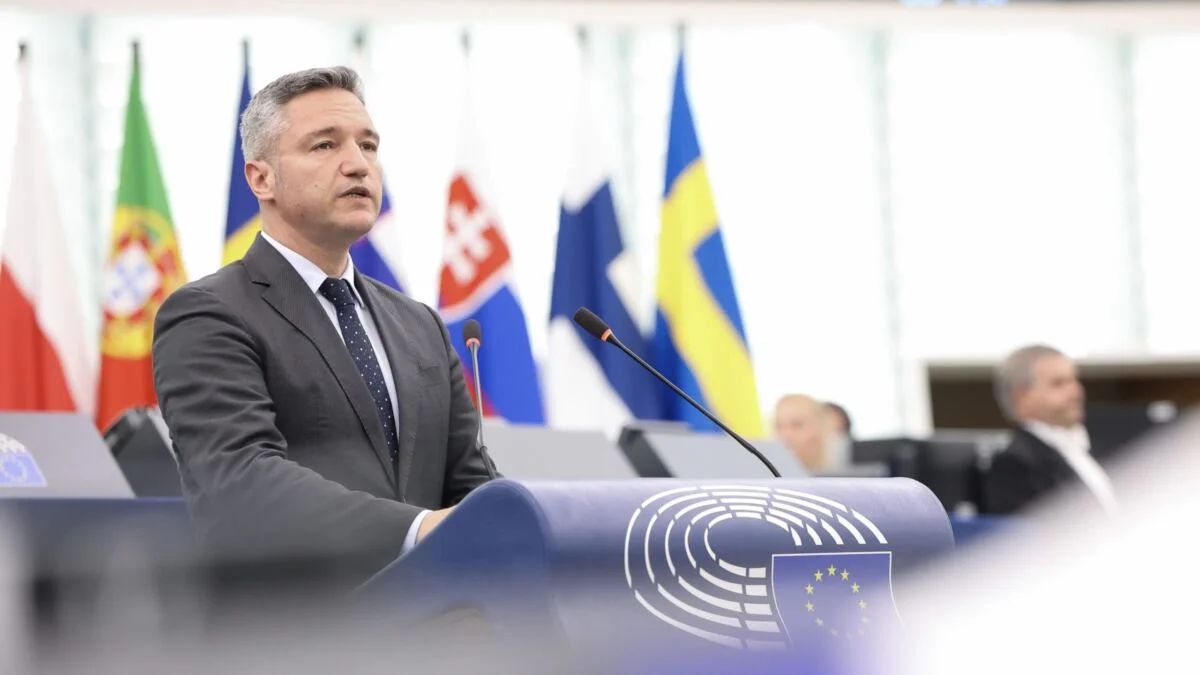
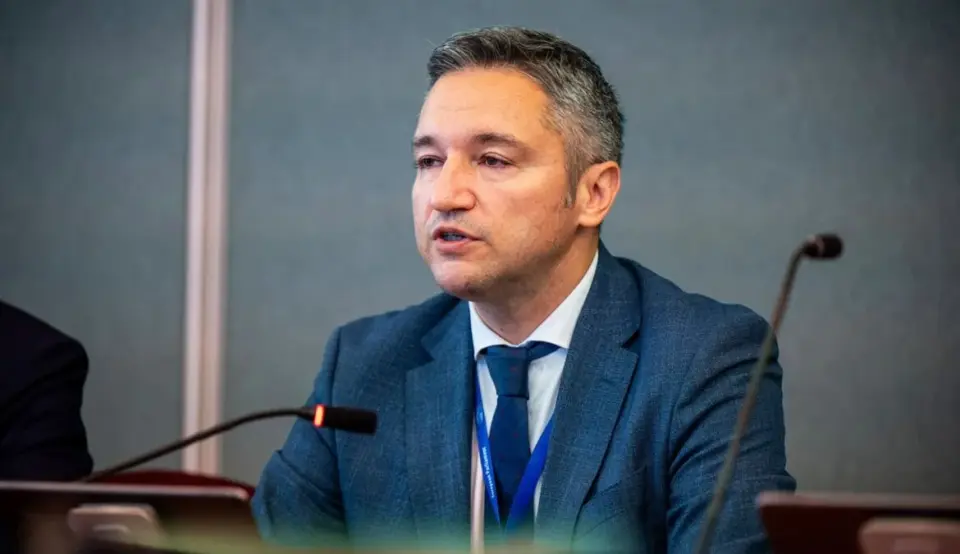
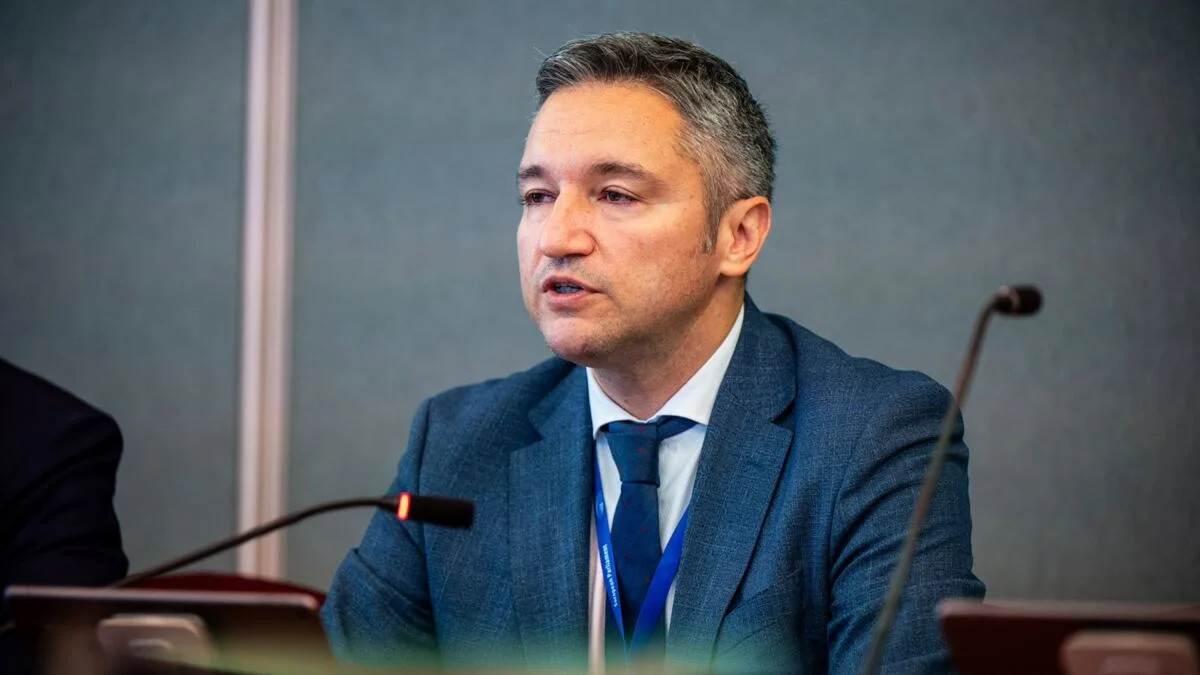
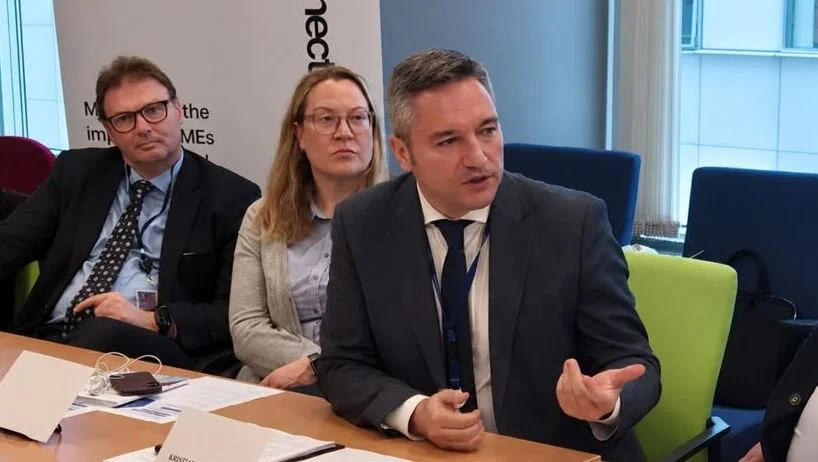
Kristian Vigenin with an analysis of the government programme: There are concrete measures, but measurable goals are missing
The government programme is a fact. Now we must measure the result
I have more than once called for a clear government programme to be drawn up and publicly presented, one that ties political intentions to concrete deadlines, resources and responsibility. Such a programme is now a fact and I take it as my responsibility to present my assessment of it. I am also publishing the full analysis, because with the prospect of a four-year term, society has the right to know not only what the government intends to do but also by what results we will judge its success.
My main conclusion is that the programme is more concrete than an ordinary political declaration. It contains a recognisable vision for restoring state capacity, a more active role for the state in the economy, a transition from a cheap labour model to production with higher added value, and the use of Bulgaria’s geographical position as a transport, energy and digital hub. There are also concrete measures in defence, artificial intelligence, healthcare, infrastructure and European funds. But the document remains more of a strategic manifesto with a detailed catalogue of actions than a finished system of management by results.
The most serious shortcoming is the gap between a deadline for carrying out an activity and a measurable public result. Adopting a strategy, creating a fund, a platform or a council, and amending a law may be necessary, but in themselves they do not show whether Bulgaria has become richer, more equal and better governed. There are no clear 2030 targets for productivity, real incomes, GDP per capita, high-technology exports, poverty, inequality, pension adequacy and regional convergence. Nor are there sufficiently concrete end values for avoidable mortality, access to healthcare, water losses and the number of people living under water rationing.
From the point of view of the left, the most substantial contradiction is between the declared social state and the instruments with which it is to be built. The programme keeps the flat tax on income and the standard VAT rate while at the same time placing an emphasis on a balanced budget and on limiting the state’s redistributive function. It does not propose a tax-free minimum, a tax credit for low-paid workers, more progressive taxation of high incomes, or a systematic assessment of the burden on different groups. There are measures on the minimum wage, pensions and collective bargaining, but there is no target for the median wage, the share of labour in created value, the working poor, the coverage of collective agreements or the real purchasing power of pensioners. Social policy is stronger as an intention than as a redistributive mechanism.
Industrial policy points in the right direction but has too broad a scope. Artificial intelligence, semiconductors, space, defence, automotive, quantum and clean technologies are all prioritised at once. It is not clear which sectors are the actual national specialisations. Nor are sufficient social conditions attached to public support for business: decent pay, collective bargaining, regional employment, local suppliers, staff training and a public return where there is significant state funding. Otherwise the state may take on the infrastructure and the risk while the profit remains entirely private.
The European Union is present horizontally throughout the programme and there are concrete intentions on the Multiannual Financial Framework 2028 to 2034, cohesion policy, the Social Climate Plan and the European Competitiveness Fund. But once again the logic of absorption dominates rather than that of impact. It is not enough for the funds to be paid out; we need to know in advance what growth in productivity, incomes, regional connectivity and the quality of public services they are to achieve. The social dimension of Bulgaria’s position in the EU is also less developed, wage convergence, a just transition, labour rights and the protection of the cohesion resource.
On the large infrastructure projects there is more specificity, but the deadlines often refer to design, procedures or the start of construction rather than to completion. The Belene nuclear plant is not included as a concrete project; the priority is units 7 and 8 of the Kozloduy nuclear plant. For the tunnel under Shipka the start of construction is promised by the end of 2029, while for the new bridge over the Danube the commitment is mainly to design and preparation. The second railway link with Turkey and Corridor VIII are included, but some of the deadlines fall outside the term of office. Defence is among the most detailed sections, but the intention for spending to reach 5% of GDP by 2035 is not accompanied by a clear annual trajectory or by an analysis of how spending on healthcare, education and social policy will be protected.
There are areas in which the programme offers useful specificity, mobile medical services, telemedicine, incentives for health professionals in remote areas, medicine tracking, AI infrastructure and water risk management. But here too a guaranteed end standard is missing: a maximum waiting time for access to a doctor, an acceptable level of co-payment, a deadline for access to a new therapy, uninterrupted drinking water supply, or a socially bearable price for water and sewerage services. Demographic policy is rightly defined as horizontal, but it remains mainly coordinating and is not sufficiently linked to affordable housing, secure employment, childcare and quality public services.
That is why, in my view, the programme should be supplemented with a short and binding annex: a limited set of national results for 2030, baseline values, annual interim targets, a budget and a source of funding, a responsible institution, the main risks, and a periodic public report. This would turn the document from a collection of intentions into a real contract with citizens. The main problem is not a lack of ideas. What is missing is a sufficiently strict choice, a clear price and a measurable final account of how Bulgaria should look at the end of the term. My full analysis is attached to this publication.
For the full analysis, click here:
More
News
18/10/2026