19/10/2026

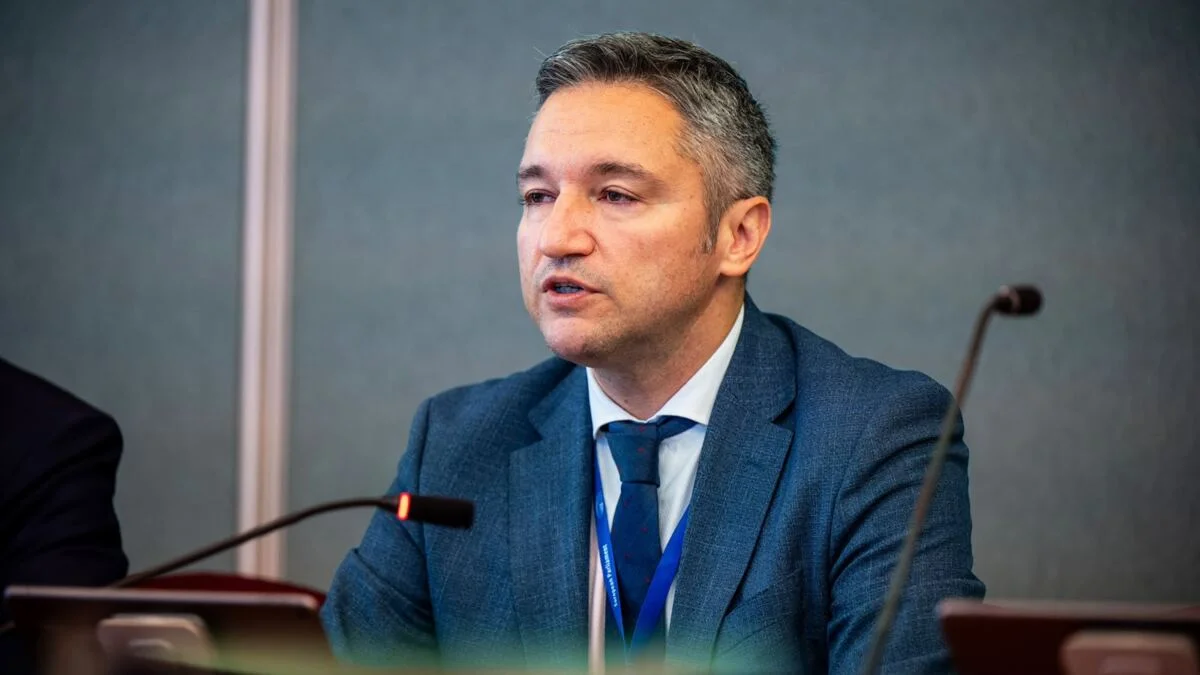
Kristian Vigenin with an analysis of the government programme: There are concrete measures, but measurable goals are missing
14/08/2026
Kristian Vigenin travels to Ulaanbaatar for a UN conference
23/08/2026Kristian Vigenin with an analysis of the government programme: There are concrete measures, but measurable goals are missing
14/08/2026Kristian Vigenin travels to Ulaanbaatar for a UN conference
23/08/2026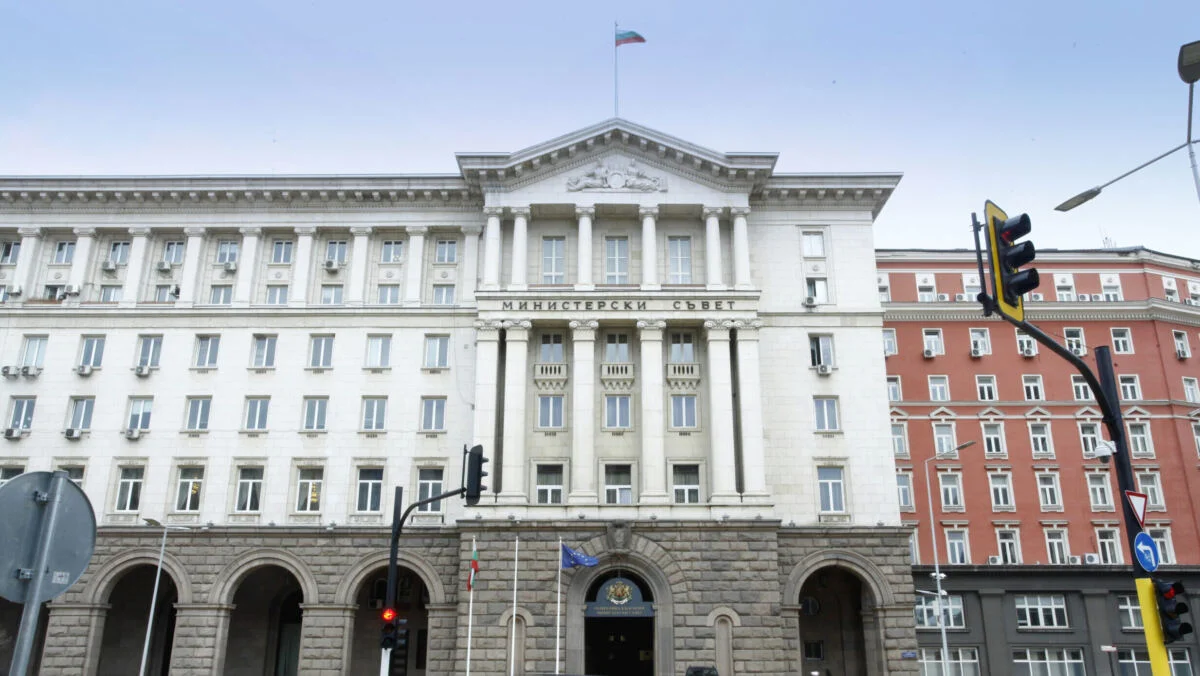
Analysis of the 2026-2030 government programme: between stated intentions and measurable results
Overall conclusion
Given the premise of a stable parliamentary majority and a full term in office, the programme should be judged not simply as a political platform, but as a four-year contract for concrete results. Measured against this higher standard, its performance is uneven.
The most accurate description is: a strategic manifesto with a detailed catalogue of sectoral measures, but without a sufficiently complete system of measurable results, financial backing and social redistribution.
The document has a recognisable overall concept. It combines restoring state capacity and the rule of law, an active role for the state in economic development, a shift from an economy of cheap labour and consumption to investment, productivity, exports and high technology, using Bulgaria’s geographical position as a transport, energy and digital hub, reducing social and regional inequalities, and making more active use of EU and NATO membership.
This is not a random collection of unrelated promises. The introduction itself diagnoses the lack of a national strategy, weakened institutional capacity and deepening social and regional inequalities, and then sets out a vision of a modern European state with strong institutions, a competitive economy, social justice and technological development.
The programme also explicitly announces a shift from a model based on consumption, redistribution and cheap labour to growth through investment, high productivity and an export-oriented high-tech economy. (Programme, p. 11)
At the same time, this concept has not been turned into a sufficiently clear hierarchy of national goals, measurable end results, budget constraints and cross-sectoral dependencies. The impression that the programme is largely a collection of priorities is therefore partly, but not fully, confirmed. There is an overall direction, but no sufficiently clear architecture for getting there.
From the left’s point of view, the key contradiction is that the language of an active, social state is not backed by equally clear tools for redistribution, strengthening the position of labour, expanding universal public services and guaranteeing a public return on public support for business. This weakness shows most clearly in fiscal, tax, industrial and social policy.
1. There is a vision, but no strongly articulated national “theory of change”
A relatively consistent chain of cause and effect can be traced in the document: dismantling corrupt and oligarchic dependencies should free up public resources and improve the institutional environment; this should attract investment and develop high value-added industries; and higher productivity and exports should lead to higher incomes, regional employment, public trust and social cohesion.
A similar logic links education, science, innovation, artificial intelligence, industrial parks and economic diplomacy. Likewise, across transport, energy, defence and foreign policy, the idea emerges that Bulgaria should use its geographical position as the basis for a new geo-economic role.
The clearest understanding of comparative advantage is in foreign policy, where the country’s geographical position is defined as its main geopolitical advantage, one that must be turned into real transport, energy and digital infrastructure and recognised as a European priority. (Programme, p. 67) The economic section adds the national raw materials base, industrial parks, microelectronics, artificial intelligence, the defence industry, car manufacturing and research and development. (Programme, pp. 51-52)
The problem is that these advantages are identified politically rather than proven through comparative analysis. There is no systematic assessment of Bulgaria’s position relative to competing countries, or of productivity, exports, human capital and supply chains by sector. Sectors are not ranked by their national potential, no distinction is made between existing advantages and desired future specialisation, and the chain “national asset – specific market – investment instrument – measurable result” remains undeveloped.
For example, artificial intelligence, semiconductors, space, quantum technologies, biotechnology, defence, car manufacturing, raw materials, hydrogen and net-zero industry are all named as priorities at the same time. This is a very broad set, and it is not clear which three or four areas really take the lead, or under what conditions the state would redirect resources from the less successful to the more promising ones.
A further problem is that a number of key strategic choices are postponed to future documents. The National Industrial Strategy 2026-2035 has yet to be drafted, by December 2026. (Programme, p. 56) The Energy Strategy to 2050 is to be prepared in 2027 and adopted in October 2028. (Programme, p. 149) A new railway strategy, an update of the demographic strategy and a new national concept for regional development are also planned. In this sense, the programme often says which strategy will be written, rather than containing the final strategic choice itself.
This matters especially for a government expected to serve a full term: the first two years should not be spent mainly on drafting strategies when many investment decisions need to be prioritised right away.
2. The programme can be tracked as a set of activities, but is hard to measure in terms of results for society
This is the document’s most serious weakness.
The programme contains an unusually large number of deadlines and “Expected effects” sections, but relatively few indicators with baseline and target values. This accurately reflects the document’s structure: a strong focus on completing activities and a weaker focus on the final change in society and the economy.
The difference matters. Adopting a strategy, setting up a council or platform, amending a law and holding a forum are activities. Results should be measured by a concrete rise in productivity and high-tech exports, a reduction in the risk of poverty and in regional disparities, lower water losses and avoidable mortality, and higher life expectancy and real disposable income.
In the economic section, the expected results are phrased as “growth in value added”, “increased productivity”, “increased investment” and “a higher share of export-oriented SMEs”, but without baseline or target values. (Programme, p. 52)
The same approach is used for incomes and the labour market: “higher incomes”, “reduced structural imbalances” and “a larger share of the workforce with the necessary skills”, again without a measurable target. (Programme, p. 88) On regional development, more investment, jobs and access to services are promised, but there is no indication of how much the gap between the leading and lagging regions should narrow. (Programme, p. 132)
There are some more specific exceptions: a budget deficit of up to 3% of GDP, a plan to reach defence spending of 5% of GDP by 2035, 97% cadastral coverage, business registration and the first permit for an investment project within five working days, training for 2,400 emergency care specialists, specific capacities and lengths of energy infrastructure, and 100% monitoring of stocks of medicinal products.
But these exceptions do not add up to an overall system for assessing the government.
There are no national targets for 2030 for real GDP growth and GDP per capita, convergence with the EU average, labour productivity, investment, research spending and high-tech exports. Nor are there target values for real incomes, the risk of poverty and social exclusion, the Gini coefficient, the pension replacement rate, regional employment and access to services, water losses, avoidable mortality, time to access healthcare and the share of businesses using artificial intelligence.
From a social perspective, there are also no indicators for labour’s share of national income, the working poor, collective bargaining coverage, the gap between the average and the median wage, or the burden of housing, health and energy costs on household incomes.
As a result, at the end of the term it could be reported that many laws and strategies have been adopted, without anyone being able to say convincingly whether Bulgaria has actually become richer, more competitive, more equal or better governed.
The programme itself recognises the need for management based on measurable results, but the system for linking results to the budget, the annual review of strategies and the monitoring of administrations’ targets are planned only for 2029. (Programme, pp. 48-49) This means the measurement mechanism is due to appear almost at the end of the term, instead of being attached to the programme itself from day one.
3. Economic and industrial policy are clearer as a direction than as results
Industrial policy
Compared with many general government programmes, the sectoral focus here is relatively clear. The priorities listed are artificial intelligence and high-performance computing, microelectronics and semiconductors, the defence industry, space and dual-use technologies, car manufacturing, robotics and automation, clean technologies, net-zero industry and high value-added production built around the national raw materials base.
The programme provides for industrial parks, clusters with universities and research organisations, an investment portal, a one-stop service for strategic investors, regulatory relief, a new framework for public-private partnership, tax incentives for research and economic diplomacy. (Programme, pp. 51-52)
This is one of the document’s stronger elements, but it remains mainly a policy for attracting capital and technology rather than a fully developed social contract for industrial development.
From a left-wing perspective, a significant omission is the lack of social and public conditions attached to state aid: minimum pay standards, collective bargaining, training and staff retention, regional employment, local suppliers, environmental commitments and a mechanism for the state to receive a share of the success where public funding is significant. Otherwise there is a risk that the state takes on the infrastructure and the risk, while the profit stays entirely private.
But there is still no complete industrial policy in the strict sense. It is not clear which sectors are leading national specialisations, which are supporting ones and which are merely promising; which will receive direct public support and under what conditions that support will end; what share of investment and jobs should be outside Sofia; what local contribution and technology transfer are expected; and what human, energy and infrastructure resources are needed.
It is particularly telling that the National Industrial Strategy itself is to be drafted after the start of the term. The programme therefore contains a list of desired industries, but not yet a complete industrial selection and sequence.
Competitiveness and new markets
The topic is clearly present. The programme provides for support for the internationalisation of SMEs, export insurance, financial instruments, trade missions, business forums, market analyses and a reorganisation of economic diplomacy. (Programme, pp. 53-54)
The weakness, again, is measurement. The expected effects are more companies advised, forums, missions and sector reports. (Programme, p. 55) This measures the administration’s activity, not the market result.
There are no targets for the value and technological structure of exports, for new markets with a set minimum turnover, for the number of businesses that become sustainable exporters, for Bulgarian companies’ participation in supply chains, or for exports of services and intellectual property.
4. The financial model is not sufficiently tied to the scale of the promises
The programme provides for keeping proportional taxation of corporate and personal income and the standard VAT rate. The main additional resources are expected from better tax collection, curbing the grey economy, spending control and European funding. (Programme, p. 35) This model provides predictability, but offers no new distributive tool for reducing inequality.
At the same time, the programme announces a lasting reduction of the deficit and an aim of a balanced budget, limits on public debt, defence spending reaching 5% of GDP by 2035, large transport and energy projects, pension increases, new social and health services, investment in science, artificial intelligence, semiconductors and industrial parks, as well as building renovation, water and sewerage and railway infrastructure, and regional development.
There is no consolidated financial table showing the total cost of the programme, annual capital spending, the ratio of national to European funding, the share of loans, concessions and public-private partnerships, the state’s contingent liabilities, and the projects that would be postponed if growth were lower or revenue weaker.
This is a major structural gap. The government can have high investment, social spending and fiscal consolidation all at once, but only if it shows consistency, priorities and sources of funding.
Further tension comes from the stated aim of “gradually limiting the redistributive function of the state” alongside the declared goal of reducing social and regional inequalities. (Programme, p. 39)
The combination of flat income tax, a heavy burden of indirect taxes and the aim of a balanced budget leaves little room for an active redistributive policy. There is no assessment of who will bear the burden of consolidation, how low and middle incomes will be protected, and how universal public services will be funded without deepening inequality.
A positive measure is the intention to introduce cost-benefit analysis, prioritisation and monitoring for nationally funded investments. (Programme, p. 38) But this, again, is a promise of a future system, not an assessment already applied to the projects included in the programme.
5. Incomes, pensions and social inequality: there are tools, but no plan for the final level of well-being
The programme includes important social tools: a new mechanism for setting the minimum wage, expanded collective bargaining, annual pension increases, updated insurable earnings, more targeted support for people with disabilities, social and integrated health and social services in the community, and support for working parents and families with children. (Programme, pp. 87-90)
But there is no measurable plan for income growth. No target is set for the real average and median wage in 2030, for the ratio of the minimum to the median wage, for the minimum income after tax, for the minimum pension and the pension replacement rate, for reducing poverty among pensioners, or for the share of pay in value added. Nor is there a target for collective bargaining coverage or for reducing in-work poverty.
Pensions are to rise every year, but there is no predefined real outcome for purchasing power or for the risk of poverty. (Programme, p. 89)
Even more importantly, tax policy plays practically no part in the policy for raising low incomes. The programme keeps the proportional income tax and VAT, without proposing a tax-free allowance, a tax credit for low-paid workers, family-based income taxation, more progressive taxation of high incomes or a review of the taxation of capital, property and tax reliefs.
The fight against inequality is thus left almost entirely to transfers, services and the labour market, while the basic tax structure stays unchanged.
So there is a social programme for administering support, but no clearly formulated plan for raising living standards. From a left-wing perspective, a decent income cannot simply be an expected side effect of investment: it requires a consistent policy on wages, labour rights, collective bargaining and affordable public services, including housing, healthcare, education, care and transport.
6. Demographic policy is rightly defined as cross-cutting, but remains mainly a matter of coordination
The document rightly recognises that demography cannot be solved with one-off birth grants alone. It is linked to family policy, employment, education, health, infrastructure, regional development and migration.
It provides for reconciling family and working life, childcare, active ageing, bringing Bulgarians back from abroad and attracting people to depopulated regions. (Programme, pp. 92-95)
This is conceptually right, but families’ demographic choices depend above all on secure employment, predictable incomes, affordable housing, childcare, healthcare and education. These material preconditions are present in scattered form, but are not brought together in a measurable demographic framework.
The concrete measures consist mainly of re-establishing the National Council on Demographic Policy, updating a strategy, training for the administration, regional visions, monitoring and two-year plans, as well as unspecified “support packages” for the diaspora and for moving to lagging areas. (Programme, pp. 93-95)
There are no measurable targets for the birth rate and families’ ability to have the number of children they want, net migration and the number of Bulgarians returning, retaining university graduates, the economic activity of women and older people, access to nurseries and kindergartens, depopulation of specific regions, or the scale of legal labour migration.
The programme speaks of a “trend towards stabilisation” of the population and of slowing depopulation, but does not say what this would look like in numbers. (Programme, pp. 94-95)
Labour shortages are addressed through training, surveys of employers’ needs, activating vulnerable groups and the return of the diaspora. However, there is no integrated policy combining skills with automation and higher productivity, internal mobility, the return of Bulgarians, legal labour migration, bringing inactive people into work, longer working lives and freeing up labour through better care for children and dependent older people.
7. Regional disparities are well diagnosed, but there is no measurable target for convergence
The regional section clearly describes the loss of population, investment and economic activity, limited access to services, unfinished transport infrastructure, water rationing, high network losses and worn-out water and sewerage infrastructure. (Programme, p. 129)
The programme provides for transport corridors, industrial zones, support for coal regions, decentralisation, a new concept for regional development, the cadastre and digitalisation, as well as investment in water and sewerage and housing infrastructure.
But it does not answer the main question: by how much should regional disparities be reduced by 2030?
There are no targets for narrowing the gap in GDP per capita, employment and wages between regions; for access to a doctor, a school and public transport; for travel time to the regional centre; for investment per person and migration from lagging regions; for the number of settlements with water rationing; or for digital coverage and access to administrative services.
Decentralisation is framed mainly as preparing an analysis and a strategic framework. There are no visible concrete decisions on municipalities’ own revenue, local tax bases, transfers, municipal investment capacity or the transfer of clearly defined powers.
From a left-wing perspective, minimum territorial standards for public services are also missing. Regional policy remains mainly project-based, rather than based on a guaranteed right of access to school, medical care, public transport, water and digital connectivity, whatever the size and income of the settlement.
There is also a risk that the large corridors will not reduce regional disparities on their own. They can help lagging areas, but they can also concentrate even more investment around already strong centres unless they are combined with local human capital, industrial land, public services and dedicated regional investment packages.
8. The European Union is a cross-cutting framework for the programme, but not always a national political strategy
EU membership is not limited to the section on European funds. The European framework is present in justice, finance, industry, AI, defence, transport, energy, the environment, agriculture and social policy.
The European framework is woven through a large part of the document. This shows how closely sectoral policies are tied to the European legal and financial environment, but it does not automatically mean that Bulgaria has its own complete strategy for influencing the European agenda.
The section on European funds is relatively substantive. It acknowledges that more than 37 billion euro in European funds have not had a sufficiently tangible effect, notes the delays in the Recovery and Resilience Plan and the cohesion programmes, sets a target of full absorption by 2030, and provides for a Social Climate Plan and the preparation of a National and Regional Partnership Plan for 2028-2034.
It also looks at the future European Competitiveness Fund, for which it proposes a national mechanism to support Bulgarian projects. (Programme, pp. 39-43)
It is particularly positive that the programme understands the problem of Bulgaria’s low success rate in competitive European programmes and proposes institutional support, instead of relying solely on pre-allocated national quotas. (Programme, p. 41)
The 2028-2034 Multiannual Financial Framework is addressed directly. The goals are to keep funding for cohesion and agriculture and to gain access to new instruments for defence, connectivity and technology through a coordinated position and coalitions with like-minded countries. (Programme, p. 69)
There are several weaknesses.
First, the logic of absorption still dominates over the logic of impact. The programme itself notes that the billions spent so far have not produced a sufficiently visible result, yet many of the new criteria for success are again “full absorption”, “plan submitted” and “payments received”. (Programme, p. 44)
Second, there is no quantitative target for the national financial envelope, for Bulgaria’s share of centrally managed funds or for raising project success rates. There is no ready national list of projects for 2028-2034, no preliminary co-financing framework and no clearer description of the coalitions and trade-offs on individual European policies.
Third, in many sections European policy is understood mainly as transposing regulations and accessing funding. Less developed is the question of which European policies Bulgaria wants to initiate and lead, rather than simply implement and receive funds from.
From a left-wing perspective, the social dimension of European policy is less developed than the topics of competitiveness, defence and technology. The European Pillar of Social Rights and the Social Climate Plan are present, but they have not been turned into clear national positions on wage convergence, expanding collective bargaining, protecting public services, a just transition and safeguarding cohesion and social resources in the competition with new spending on defence and competitiveness.
9. Defence is one of the most concrete sections, but lacks an overall financial and operational framework
The defence section is considerably more concrete than the document average.
It provides for a national plan to reach defence spending of 5% of GDP by 2035, meeting NATO capability targets and using the European SAFE instrument.
Specific acquisitions are listed: IRIS-T systems, 3D radars, 155 mm howitzers and ammunition, counter-drone and electronic warfare equipment, a multiple rocket launcher system, anti-ship and air defence missiles, F-16s, combat vehicles, patrol vessels and mine countermeasure ships, as well as infrastructure, military mobility, cyber defence and artificial intelligence. (Programme, pp. 82-84)
Integration with European and NATO priorities is clear. In addition to SAFE, the programme provides for participation in EDF, EDIP, NATO DIANA and other initiatives, and for more active involvement of the Bulgarian defence industry. (Programme, p. 56)
Here the document gives a real picture of what the government wants to acquire.
But the document does not show the annual path to 5% of GDP, the cost and financing of individual projects, servicing of the SAFE loan, the order of priority if resources fall short, or concrete targets for operational readiness, ammunition, staffing, technical serviceability and the voluntary reserve.
Nor is there a minimum share set for Bulgarian industry, local value added or technology transfer.
The 5% target lies beyond the immediate horizon of the term, and the programme gives no interim values for 2027, 2028, 2029 and 2030. As a result, the largest measurable financial commitment in the document is also the one least tied to the four-year budget framework.
From a left-wing perspective, reaching 5% of GDP is not only a defence choice, but also a huge social and budgetary one. Even if the need for stronger defence is accepted, there must be clear guarantees that the increase will not crowd out spending on healthcare, education, social protection and the climate transition, as well as stricter parliamentary oversight and a public return through Bulgarian industry, jobs and technology. Such safeguards have not been developed.
10. Artificial intelligence is among the most developed topics
The section on artificial intelligence is one of the few that combines an overall vision, infrastructure projects, a legal framework, links with science and business, European initiatives and concrete deadlines.
It provides for the BRAIN++ AI Factory, next-generation computing resources and a regional AI network, centres for artificial intelligence and computer science, a regulatory sandbox under the EU AI Act, a National Deep Tech Fund, a semiconductor pilot line, data spaces, tax incentives for research, NATO DIANA and the use of AI in the administration, customs, healthcare, justice and defence. (Programme, pp. 59-60)
The link with the European strategy is visible through the AI Act, the European Chips initiative, GOVSATCOM, IRIS, the European Space Agency and European technology programmes.
But Bulgaria’s role is framed too broadly. The country is meant to be a regional centre for AI, semiconductors, space, deep tech, biotechnology and defence technology all at once, without choosing a narrower niche, for example Bulgarian language technologies, industrial AI, cybersecurity, autonomous systems, AI for healthcare, dual-use solutions or high-performance computing as a regional service.
There are also no targets for computing capacity, the number of companies and researchers, private capital attracted, patents and start-ups, the share of SMEs using AI, exports of AI products and services, international partnerships and the energy and network infrastructure needed.
A goal is set for Bulgaria to leave the group of “moderate innovators” in the European Innovation Scoreboard, but no target position or index value is given. (Programme, p. 62)
AI policy is therefore strong as a project programme, but not yet strong enough as a measurable national specialisation.
There are also no rules on how publicly funded computing and data infrastructure will be made available to universities, SMEs and the regions, how society will get a return, or how the effects on work will be managed through training, social dialogue and protection when jobs are displaced by technology.
11. Healthcare directly addresses remote areas, new technologies and access to therapies
On this criterion, the programme gives a positive and relatively concrete answer.
Remote and hard-to-reach areas
The programme provides for mobile medical teams and remote services funded by the National Health Insurance Fund, primary care outpatient clinics in small settlements, contracts between healthcare professionals and the Fund, higher pay for work in hard-to-reach areas, a real-time electronic health map, a reorganisation of emergency care and highly specialised equipment in more than 50 state and municipal hospitals. (Programme, pp. 120-121)
This is one of the areas where there is a clear link between the problem, the tool and the deadline.
New therapies and medicines
The programme provides for centralised procurement of expensive medicines, an expanded tracking system, a stated right to 100% access to medicinal products, centralised health technology assessment, wider access to therapy and lower co-payments.
It also includes personalised medicine, remote diagnostics and monitoring of drug therapy, as well as AI systems for assessing quality and supporting treatment. (Programme, pp. 119-120 and 125-127)
Even so, the focus is mainly on control, procurement and availability. There are no targets for the maximum time from European authorisation to reimbursement in Bulgaria, access to innovative, gene, cell and rare disease therapies, clinical trials, the use of real-world data on treatment outcomes, the maximum permitted co-payment, time to diagnosis and treatment, or survival rates for specific cancers.
The introductory analysis contains specific data on mortality, infant mortality, cancer and staff shortages. (Programme, p. 118) But this baseline data has not been turned into targets for 2030.
“Reduced mortality” is expected without saying by how much, and the pledge to “eliminate regional imbalances” is not backed by indicators for access time, numbers of doctors and nurses, outpatient clinics or population coverage.
From a left-wing perspective, universal access also requires a measurable strengthening of public capacity, working conditions and staffing standards, not just digital control and more efficient contracting.
12. Foreign policy has recognisable priorities, but there are too many of them and they are not ordered well enough
The strongest idea in the foreign policy section is that membership of the EU and NATO is no longer an end in itself and that success must be measured by how Bulgaria uses that membership. Geography, connectivity, the Black Sea and the Western Balkans are identified as areas where the country can make its own contribution.
The specific focal points are the Multiannual Financial Framework, transport, energy and digital corridors, Black Sea security, the Western Balkans, accession to the OECD, economic diplomacy, Bulgarian communities abroad and participation in international organisations.
This is a clearer foreign policy orientation than the usual general list of the EU, NATO and good-neighbourly relations.
But practically every region remains a priority: the EU, the US, the Western Balkans, Turkey, Eastern Europe, Central Asia, the Middle East, Africa, Asia and Latin America. (Programme, p. 70) There is no sufficiently strict hierarchy of where limited diplomatic resources will be concentrated.
Republic of North Macedonia
There is a specific commitment to good-neighbourly relations tied to the fulfilment of commitments made and the protection of the rights of Bulgarians in North Macedonia. (Programme, p. 70)
The rail link along Corridor VIII, the Rila motorway to Gyueshevo and a new Strumyani-Berovo border crossing are also planned.
However, this is not a comprehensive policy for developing relations. There is no roadmap for regular political dialogue, the work of the bilateral commissions, trade and investment, education and culture, joint management of infrastructure projects, crisis response and measurable interim steps in the European integration process.
The wording is more a condition and a principle than an active bilateral programme.
The eastern neighbours
Ukraine and Moldova are mentioned as a priority for development aid and in connection with the Bulgarian communities. (Programme, pp. 70-71)
However, there is no separate strategic axis for the Black Sea region and the eastern partners that would link security, reconstruction, energy, trade, transport and the Bulgarian communities.
13. There are concrete infrastructure projects, but the commitment is often to preparation or a start rather than completion
This is an area where the programme is more concrete, but the wording needs to be read carefully.
Belene Nuclear Power Plant
The text reviewed contains no concrete commitment to build the Belene nuclear power plant. The main national nuclear project is the construction of Units 7 and 8 at the Kozloduy NPP with AP1000 reactors.
The programme provides for readiness for a final investment decision and a general assessment of the options for “other new nuclear projects”, including small modular reactors, but Belene is not named. (Programme, pp. 152-153)
It therefore cannot be claimed that the programme commits to the Belene NPP. At most, it can be said that the general assessment of other sites does not in theory rule out a future review, but this is not written down.
Tunnel under the Shipka Pass
There is a concrete commitment to start construction by December 2029. (Programme, p. 136) This is not a commitment to complete the tunnel within the term.
New bridge over the Danube
The transport analysis identifies a second Ruse-Giurgiu bridge as a necessary element of cross-border and military mobility. (Programme, p. 139)
The specific operational measure, however, refers to designing and starting transport links near Ruse and to analysing and preparing projects at other locations by December 2029. (Programme, p. 136) This is a weaker and vaguer commitment than “a completed second bridge”.
A second rail link with Turkey
A new Yambol-Elhovo-Lesovo-Turkish border rail link is explicitly included as part of the Middle Corridor, with a deadline of December 2030. (Programme, p. 140)
Corridor VIII and North Macedonia
The rail link with North Macedonia is to be built, with deadlines of 2029/December 2034. (Programme, p. 140) This shows a strategic commitment, but also acknowledges that full completion goes beyond the term.
The overall weakness of the projects section
For many of the big projects, the deadline refers to a preliminary design, a detailed development plan, an environmental procedure, concession preparation, the start of construction or an investment decision, rather than to entry into service.
There is no overall capital programme, indicative cost, source of funding, annual milestones, responsible institution or critical dependencies. Some deadlines are December 2030, while others reach 2034 and 2035, which blurs the accountability of this particular government.
14. Water and water utilities are addressed directly, but there is no guaranteed measurable result for every citizen
The programme clearly recognises water as a strategic resource and provides for urgent investment in drinking water supply in areas with water shortages and quality problems, a national water risk platform and a register of losses, smart water meters in five priority areas, an early warning system, investment in wastewater treatment, an updated water sector strategy, a drought risk management plan, updated river basin and flood plans, and an integrated monitoring and management system. (Programme, pp. 133-134 and 165-166)
So the problem has not been ignored.
But there is no national target for 100% uninterrupted water supply, ending long-term rationing, a specific reduction in losses, compliance with quality standards, kilometres of network replaced, investment by region, affordability of tariffs and the maximum time to repair breakdowns.
So there is a plan for systems, strategies and investment actions, but not a clear promise of the end result: that every citizen has permanent access to safe drinking water by a specific date.
From a left-wing perspective, water should be treated as a universal public service, which requires guaranteed minimum access, affordable prices, public control over investment and preventing the risk and losses from being shifted onto households.
A further problem is institutional fragmentation. Water and sewerage infrastructure sits in the regional section, water resource management in the environmental section, hydropower in energy and irrigation in agriculture.
Future strategies and integrated systems are planned, but the programme itself contains no single national water balance combining available resources, drinking water needs, agriculture, energy, industry, ecosystems and climate risks.
15. Other issues that stand out
Anti-oligarchic policy is set as the foundation of the whole model
The first section treats dismantling the oligarchic model as a precondition for all other policies. The programme argues that isolated personnel and legislative actions are not enough and that the economic basis of institutional capture must be curtailed. (Programme, p. 13)
This amounts to a clear political theory of why Bulgaria has fallen behind.
At the same time, some of the planned actions, such as identifying intermediaries and front persons, public registers of compromised contractors and restricting access to public procurement, require very clearly defined standards of proof, the right of defence, judicial review and protection against political misuse. The programme does not address these safeguards in the same detail with which it describes the enforcement and control tools.
From a left-wing perspective, dismantling the oligarchic model must include not only criminal prosecution and control over intermediaries, but also lasting limits on economic concentration, monopolies, tax avoidance and the dependence of public authority on large private interests. Policies for strengthening labour, public ownership and democratic control over strategic assets are less developed in the programme.
The document is highly specific about institutions and platforms, but not specific enough about citizens’ lives
The document provides for numerous new councils, centres, funds, platforms, registers, strategies, portals, coordination units and information systems.
At the same time, the administrative reform provides for consolidation and the removal of duplicate structures. This creates a risk that the programme cuts and creates administrative structures at the same time, without a consolidated analysis of the overall institutional effect.
Public-private partnerships are used as a universal tool
PPPs and concessions are planned for transport, energy, industrial parks, and water, social and digital infrastructure. This can mobilise private capital, but the programme contains no sufficiently clear framework for risk sharing, the state’s contingent liabilities, minimum public return, tariff risks, control over contracts, their termination and renegotiation, and the reporting of PPPs as fiscal risks.
Without such a framework, PPPs may become not an alternative to budget financing, but a way of keeping future public liabilities out of the immediate budget debate.
Climate and energy contradictions are left to be resolved later
The energy section simultaneously provides for keeping coal capacity as a strategic resource, expanding nuclear power, developing renewables, gas balancing capacity, hydrogen, pumped-storage hydropower and meeting the European climate targets. (Programme, p. 147)
All these elements can coexist in a single energy model, but the programme gives no quantitative scenario for the energy mix, prices, emissions, grid needs and the lifetime of individual capacities. The decision is once again deferred to the future energy strategy.
A just transition for the workers, municipalities and local economies that will bear the costs of restructuring is not concrete enough either.
There is no overall risk register
There is no analysis of how the programme would adapt to lower economic growth or a recession, higher interest rates, delays in European funding, shortages of construction and administrative capacity, rising costs of major projects, a geopolitical or energy crisis, labour shortages or court challenges blocking legislative changes.
For a four-year programme of this scale, this is a significant omission.
Final assessment
The programme is considerably more concrete than an ordinary political declaration. It contains real legislative intentions, deadlines, institutional reforms, European instruments and a number of specific infrastructure, defence and technology projects. At the same time, its social ambition is stronger as language than as tax, redistributive and labour policy.
But it is still not complete enough as a four-year national strategy. To become one, it would need a mandatory annex with:
-
a limited set of 10-15 national outcomes;
-
a baseline for 2025/2026 and a target for 2030;
-
annual interim targets;
-
a budget and a source of funding;
-
a lead responsible institution;
-
dependencies between projects;
The programme’s main weakness is not a lack of ideas. It lacks sufficiently strict choices, a defined price and a measurable final account of what Bulgaria should look like by 2030.
From a left-wing point of view, a deeper contradiction remains: the social state is declared as a goal, but it is not backed by sufficiently strong tax, labour and redistributive policy.
More
News
18/10/2026