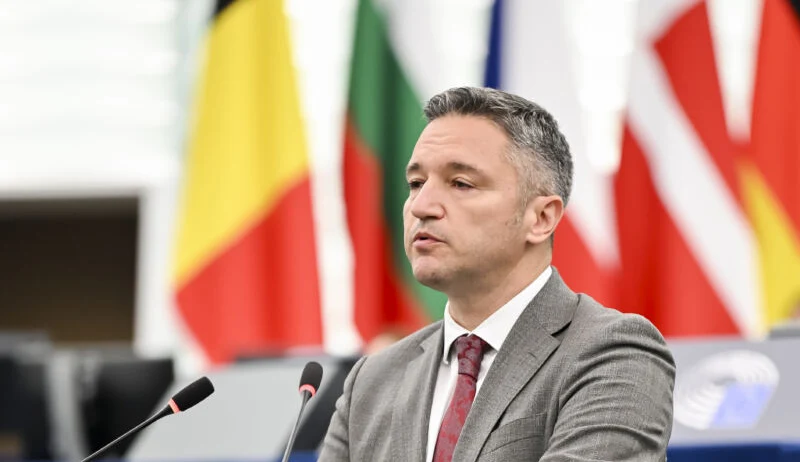
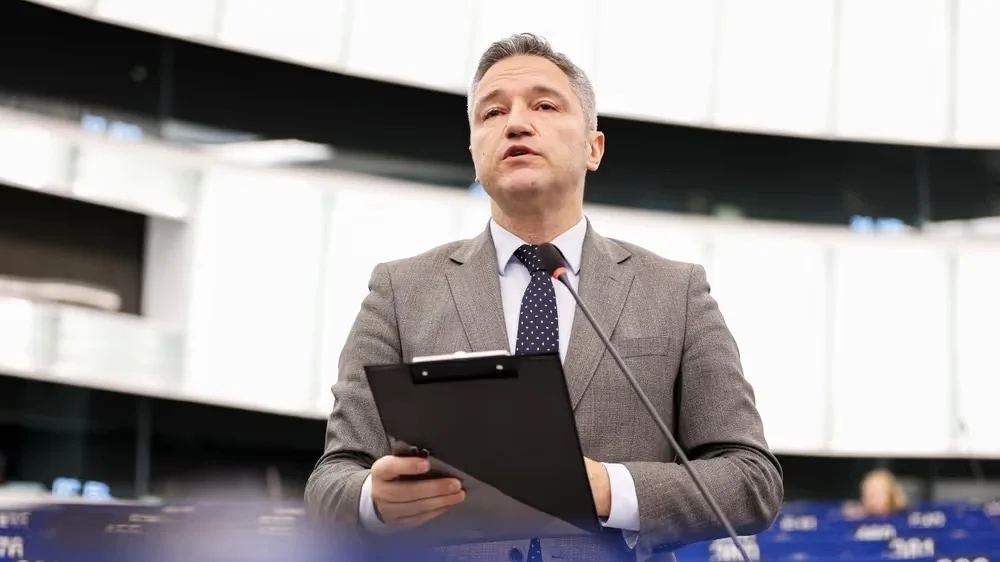
“There is a clear realization that Europe is falling behind. We are falling behind in new technologies, artificial intelligence, biotechnology, and digital solutions, and our own industry is beginning to struggle.” This was stated by Bulgarian MEP Kristian Vigenin of the Group of the Progressive Alliance of Socialists and Democrats on the “Reviziya” program on Nova News.
The challenges facing European companies
According to him, some of the challenges facing European companies stem from competition from China and the United States, but others are the result of overly complex European regulations that drain financial and human resources.
“The problem isn’t the regulations themselves. The key is for them to be designed intelligently, to encourage companies to develop new technologies, and to enable the European Union to take the lead. In practice, some of the rules have become an obstacle,” Vigenin said.
Slow decision-making in the EU
He noted that the decision-making process in the EU remains cumbersome due to the differing interests of the 27 member states and the complex negotiations between the European Parliament and the Council.
“When a compromise is finally reached, it is often far from the initial ambitions. The Union has shown that it can act quickly when there is a clear political priority. However, I don’t know if we have time to continue moving at such a slow pace,” the MEP commented.
Work on the “Omnibus” packages
Vigenin also presented his work on four of the “Omnibus” packages, through which the European Commission is proposing to simplify and amend a number of European regulations. He criticized the way in which several different regulations are being amended simultaneously through a single legislative package, which complicates the work of the European Parliament.
As a concrete result, the MEP cited the streamlining of permitting procedures for defense-related projects – currently, these can take between a year and a half and two years, but after the changes, the standard processing time is expected to be reduced to about a month and a half.
Vigenin said that he had also worked on changes to the regulations governing chemical products and the cosmetics industry: “We were able to protect the production of essential oils and their use in the cosmetics industry, which directly benefits Bulgarian manufacturers,” he said.
The European health budget
Among his other priorities are the European health budget, which has been more than doubled compared to the European Commission’s initial proposal, and the Internal Security Fund, whose funding is set to increase nearly threefold to about 8 billion euros over the next seven years. The Socialist explained that the funding will be directed toward physical security, cybersecurity, and support for national institutions.