19/10/2026

Vigenin and Penkova with another charity initiative: „Being different is a privilege!“
24/04/2025
Kristian Vigenin invited the dancers from the Chudesia ensemble to present the beauty of Bulgarian folklore in Brussels
26/04/2025Vigenin and Penkova with another charity initiative: „Being different is a privilege!“
24/04/2025Kristian Vigenin invited the dancers from the Chudesia ensemble to present the beauty of Bulgarian folklore in Brussels
26/04/2025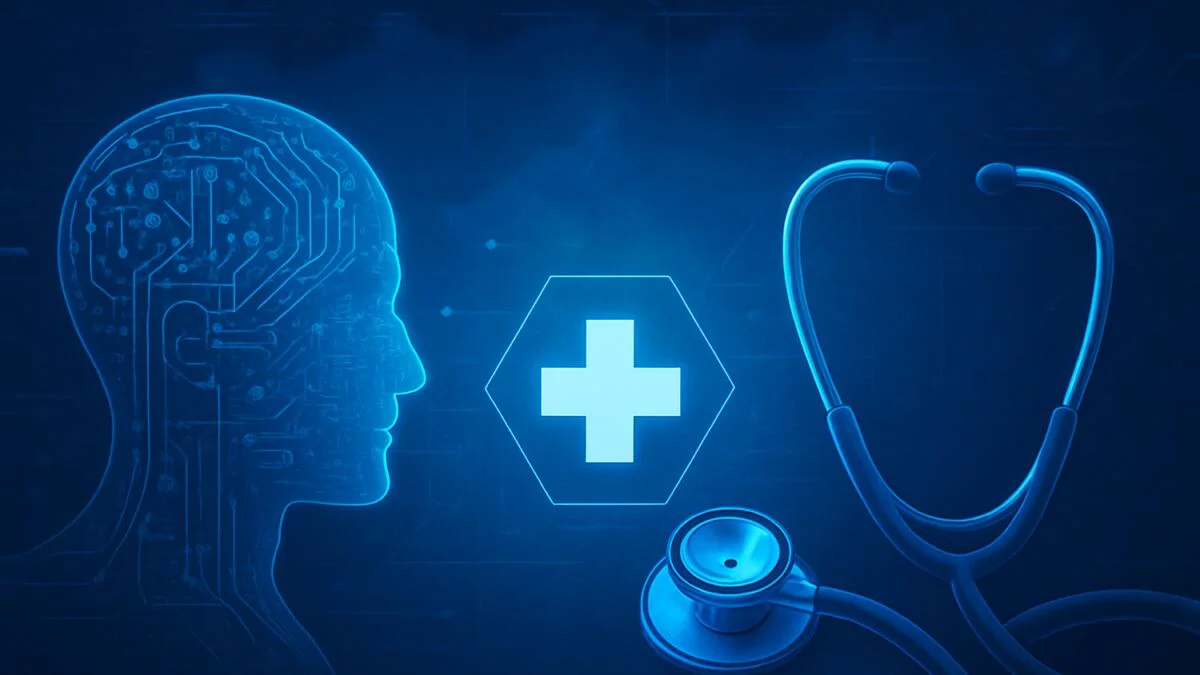
Artificial intelligence in healthcare: innovation, challenges and ethical dilemmas
Authors: Kristian Vigenin, Lidia Simova
Artificial intelligence (AI) is establishing itself as one of the most significant innovations in healthcare, offering revolutionary solutions in the diagnosis, treatment and prevention of disease. Thanks to its ability to analyse enormous quantities of data, AI is transforming the way medical specialists take decisions, offering faster and more accurate predictions. Nevertheless, while AI promises more efficient and personalised healthcare, its application also raises serious ethical questions related to transparency, confidentiality and possible bias in the algorithms.
Practical applications of AI in medicine
AI is already used in many areas of medicine, and some of its most notable applications include:
- Early diagnosis, deep learning algorithms can analyse medical images such as X-rays, computed tomography and magnetic resonance imaging in order to detect diseases such as lung cancer or skin melanomas with an accuracy exceeding that of experienced radiologists.
- Disease prediction, by analysing electronic health records and genomic data, AI can identify patients at increased risk of cardiovascular disease, diabetes or neurodegenerative disorders, which allows timely intervention.
- Robotic assistants, in operating theatres AI powers robotic systems such as Da Vinci, which assist surgeons in complex minimally invasive operations.
- Personalised medicine, the analysis of individual genetic data makes it possible to create personalised therapies that best suit the particular patient.
- Wearable devices and remote monitoring, smart watches and fitness bands using AI help to track vital signs, predict heart problems and warn of deviations from normal values.
Ethical challenges and risks
Despite the enormous benefits AI offers, its application in medicine is not without problems. Some of the biggest ethical and practical challenges include:
- Bias and discrimination, AI algorithms are trained on the available data, which may be biased because of insufficiently representative samples. For example, systems developed on the basis of data from a particular ethnic group may not be as effective for other demographic groups.
- Lack of transparency, many of the most effective algorithms are essentially black boxes (black box AI), which means that even the developers find it hard to explain exactly how decisions are taken. This raises questions about responsibility in cases of incorrect diagnosis.
- Data confidentiality and security, the use of AI requires the processing of enormous volumes of sensitive medical information. Guarantees are needed for the storage and use of this information, as well as the consent of patients for their information to be provided for processing by AI at all. Breaches of cybersecurity can expose patients to the risk of misuse of personal data.
- The role of doctors, although AI can significantly improve medical practice, there is a concern that it may influence doctors’ judgement, leading to the mechanisation of processes in healthcare and to a lack of clarity in allocating responsibility. Is a doctor always obliged to follow the judgement of AI? Who is wrong more often, the human or the machine?
- Legal and regulatory challenges, the absence of common regulatory standards for the use of AI in medicine creates uncertainty in the overall framework and especially about who bears responsibility for errors in diagnosis or treatment.
How do we deal with the challenges?
For AI to be effectively and ethically integrated into healthcare, the following measures need to be taken:
- More transparency and explanation, developers must work on creating algorithms that can explain their decisions in a way that is understandable for doctors and patients.
- Better regulation and standardisation, international regulatory bodies must develop clear guidelines for the safe use of AI in medicine.
- Protection of personal data, strict rules for managing medical information, inspired by laws such as the GDPR, must guarantee the security of patient data.
- Codes of ethics for AI in medicine, the development of ethical frameworks will ensure the fair and non-discriminatory application of AI in healthcare.
- Training of medical specialists, doctors and nurses must be trained in how to work with AI tools in order to use them optimally in their practice.
Conclusion
Artificial intelligence has the potential to revolutionise healthcare by improving diagnosis, prognosis and patient care. Nevertheless, its introduction must be carried out carefully, taking account of both the technological and the ethical challenges. The responsible use of AI in medicine requires a balance between innovation and the protection of patients’ rights, as well as cooperation between developers, medical specialists and legislators. Only in this way can we ensure that this powerful technology will be used for the benefit of society without compromising fundamental human values.
The article was published in https://www.puls.bg/
More
News

18/10/2026