03/10/2026

What kind of Europe do we want?
28/05/2026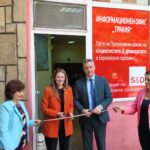
The Delegation of Bulgarian Socialists in the European Parliament opened its renovated “Thrace” office in Yambol
30/05/2026What kind of Europe do we want?
28/05/2026The Delegation of Bulgarian Socialists in the European Parliament opened its renovated “Thrace” office in Yambol
30/05/2026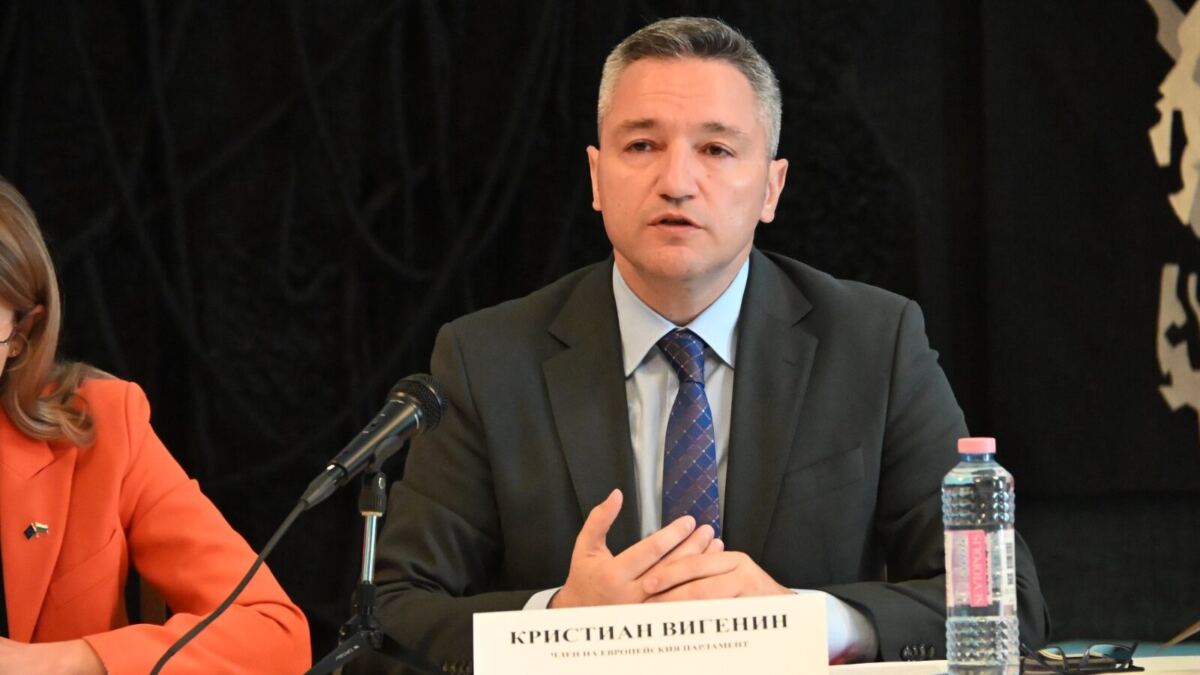
Zarkov, Vigenin and Penkova in Yambol: Water sector reform and infrastructure investment cannot be postponed
The Socialists call for solving water problems to become a national priority
“Water is a resource that, unfortunately, we in Bulgaria do not manage well. Every year we see floods and droughts that prevent hundreds of thousands of Bulgarian citizens from living a good life. Moreover, we do not use this resource in agriculture, industry or energy in a way that contributes to our prosperity. Bulgaria ranks first in Europe for water losses in the distribution network, which all citizens pay for out of their own pockets. It is time to find the right solutions and actions to tackle these problems.” This was stated by the Chair of the BSP National Council, Krum Zarkov, during the discussion “Water security, resilience and the future: from European policies to local solutions”, organised by the Delegation of Bulgarian Socialists in the European Parliament. He thanked BSP MEPs Kristian Vigenin and Tsvetelina Penkova for raising this vital issue, and in a region like Yambol, which is among the worst affected by the problem.
“We Socialists will not tire of raising these issues, which really directly affect people’s lives and health,” he said firmly. In his words, issues such as water are also relevant to the budget: “On the eve of drafting it, the ruling majority must set its priorities for the coming years. Water sector reform and investment in infrastructure are key priorities that cannot be postponed. An important political question is what Bulgarian citizens’ money is used for: water or weapons,” Zarkov added.
“Water today is a factor in economic competitiveness, energy security and the development of agriculture, industry and the regions.” This was stated by Bulgarian MEP Kristian Vigenin from the Group of the Progressive Alliance of Socialists and Democrats in the European Parliament when opening the discussion. He warned that Bulgaria is among the countries worst affected by losses in the water distribution network, which average 60% and in places exceed 90%. He pointed out that ageing water and sewerage infrastructure, insufficient investment and delayed reforms are combined with the increasingly serious consequences of climate change.
“It is important to realise that water can no longer be looked at in isolation. There is a direct link between water, energy, industry, agriculture and regional development,” he pointed out. In his words, Europe and Bulgaria also face a new challenge: the development of AI centres and battery, hydrogen and semiconductor production, which will increase pressure on water resources. In his view, reforms in the water and sewerage sector are necessary, but must be carried out carefully, through dialogue and with regard for regional specifics, so as to strike a balance between financial sustainability and the interests of local communities.
“The question of water is not just a technical one. It is a question of quality of life, economic sustainability and the future of the regions, and ultimately a question of security,” Vigenin concluded.
“If we do not start thinking strategically about water today, tomorrow the problem will be not only environmental, but also economic, social and regional.” This was stated by BSP MEP Tsvetelina Penkova during the discussion. In her words, the EU sees the 2025 water crisis as a clear signal rather than a one-off event. In this context, the European Commission has presented the European Water Resilience Strategy, and the European Investment Bank has announced a EUR 15 billion package for investment in water infrastructure. In August 2025, in a letter to the European Commission, the BSP MEPs raised the issues of modernisation, prevention and the need for a Europe-wide approach to droughts.

Penkova also stressed the increasingly strong link between energy and water infrastructure. “As in energy, here too we need to build connectivity and infrastructure capacity in advance, rather than waiting for crises,” she pointed out. In her view, Bulgaria should take advantage of European funding opportunities, as over 60% of water in the country is lost through run-down water and sewerage systems.
Tsvetelina Penkova also emphasised the social aspect of the issue: “Access to quality water at an affordable price is not a luxury, but a basic human right.”
“For far too long, water resources have been used only for overproduction and profit. Water is a public good and we cannot continue with this model. We need a balance between protecting nature and using resources sustainably,” Deputy Minister of Environment and Water Atanas Kostadinov said during the discussion. He stressed that Bulgaria still has no water and sewerage strategy and is lagging behind in meeting European requirements, and that EUR 437 million under the Recovery and Resilience Plan is at risk. In his words, the main problem is not a lack of water, but the huge losses in the network: over 70% at the Yambol water utility and over 60% on average nationally. “After billions of leva in investment, losses cannot keep rising. A different approach and better targeting of investment are needed,” Kostadinov suggested.
The Chair of the Bulgarian Water Association, Eng. Ivan Ivanov, stressed that some of the problems in the water sector are due to a lack of dialogue and a clear strategy. In his words, even significant investment will not be effective without enough human capacity. He emphasised that only about 30% of water sources are metered and real losses are unknown. “The way to reduce the large losses is measurement. Without data, we do not know the real scale of the problem. And without qualified staff, nothing can happen,” Eng. Ivanov said.
The Deputy Mayor of Hisarya, Tanya Markovska, pointed out that mineral water is a key resource for the development of health tourism and the local economy in Hisarya. At the same time, the municipality and investors face the limited flow of the mineral springs and the need for significant funding to maintain the infrastructure.
The Mayor of Bolyarovo Municipality, Hristo Hristov, insisted that the issue of water shortages be made a national priority. He also noted that the problem is not a lack of water, but the state of the distribution network and resource management: “Bulgaria is rich in water and mineral springs. The problem is not the resource, but the way we manage it and the state of the pipes.”
Water infrastructure needs a long-term strategy with a horizon of at least ten years, according to the Regional Governor of Yambol, Georgi Chalakov. He believes better coordination between institutions, reducing losses and developing new infrastructure are needed. “There is water. Let’s stop the leaks and plan for the long term. We have both the will and the means to solve this problem,” Chalakov is convinced.
Participants in the discussion agreed on the need to make water security a strategic national and European priority through long-term investment, modernisation of infrastructure and more effective management of water resources.
More
News
02/10/2026