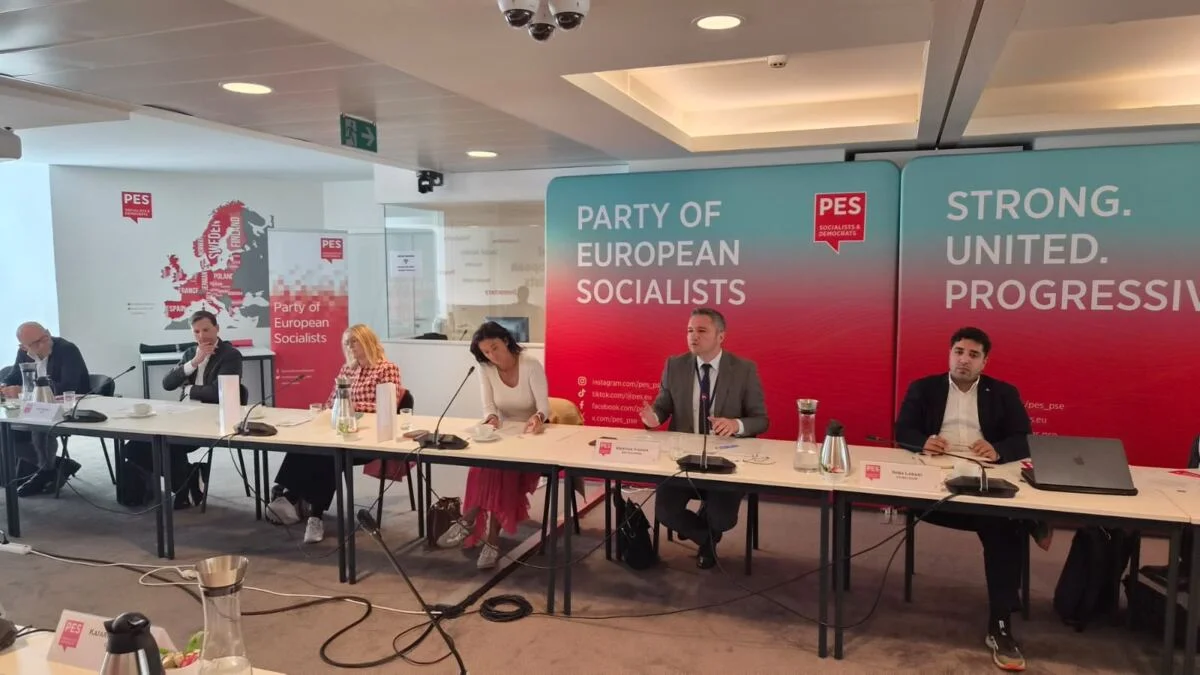
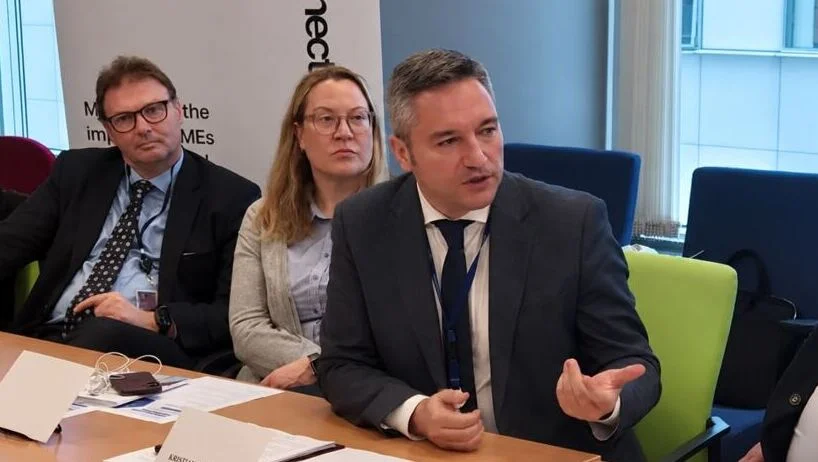
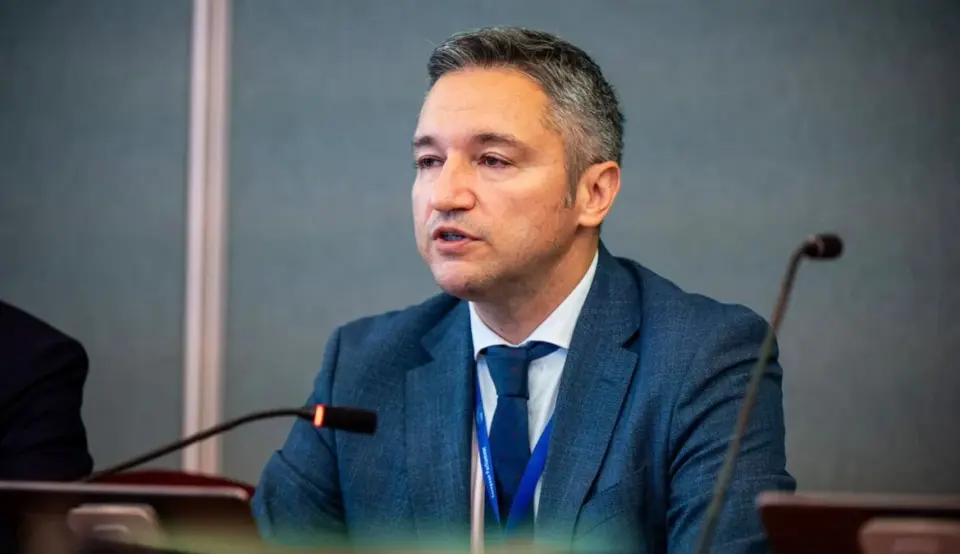
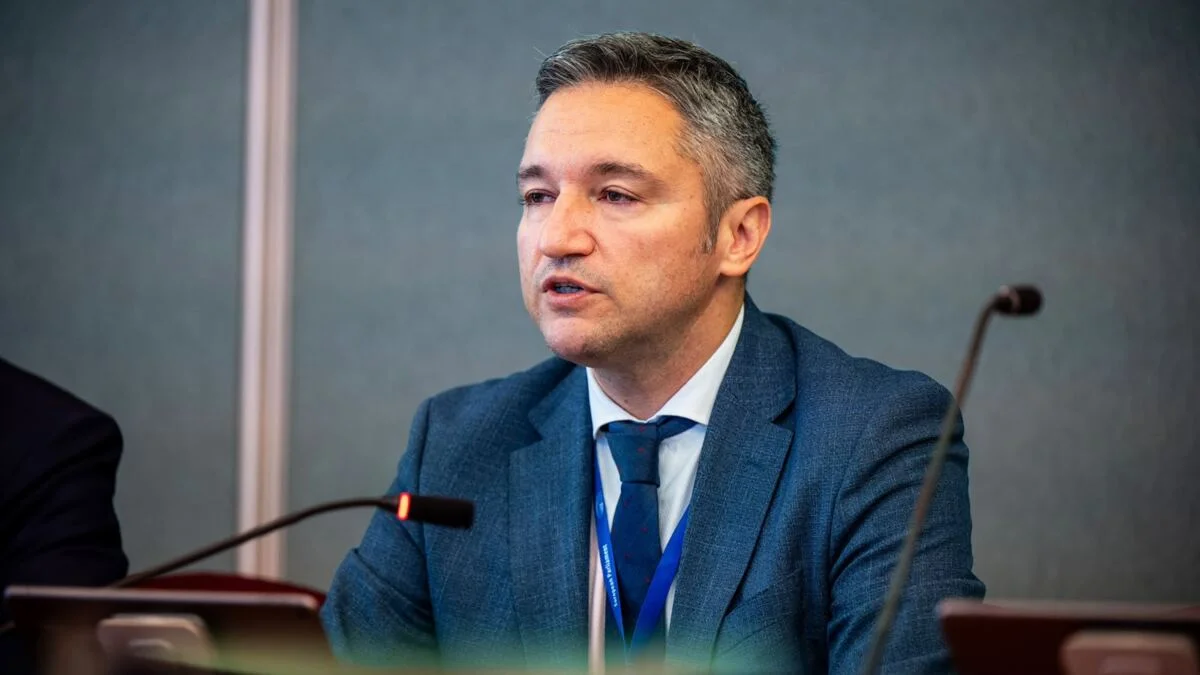
“More and more people talk to artificial intelligence almost as if it were a real person, share personal information and gradually come to trust these systems. This raises questions that are no longer only about personal data protection, but also about AI’s influence on people’s opinions, decisions and behaviour.” This was the conclusion drawn by Kristian Vigenin, Bulgarian MEP from the Group of the Progressive Alliance of Socialists and Democrats, at the second meeting of the PES Working Group on Artificial Intelligence, dedicated to “AI, democracy and fundamental rights”.
The meeting featured expert analyses of public attitudes towards artificial intelligence, the risks of disinformation and algorithmic amplification of content, and the need for a European strategy for developing more advanced AI systems.
How the use of artificial intelligence is changing
Vigenin drew attention to the rapid change in how people perceive and use artificial intelligence. These systems are becoming increasingly informal and personalised in the way they communicate, and users increasingly see them not just as a tool, but as a trusted conversation partner. “This is exactly where the new risk arises: when technology no longer just processes information but can influence how a person thinks, chooses and reacts. This calls for a much more serious conversation about limits and responsibility in the use of AI,” Vigenin said to his PES colleagues.
Expectations of clear rules
The discussion also highlighted the strong public expectation in Europe for clear rules and oversight of artificial intelligence. Among the most serious risks citizens point to are disinformation, the manipulation of public opinion, threats to privacy and fundamental rights, and fears of job losses and of certain professions disappearing.
The limits of European regulation
Vigenin noted that European regulation also has its limits.
“The EU can ban certain practices and systems on its territory, but technology develops globally. European rules on their own cannot stop such systems from being created and used outside the Union. That is why, alongside strong European legislation, we also need a broader international dialogue on the standards and limits for using artificial intelligence,” is Kristian Vigenin’s view